

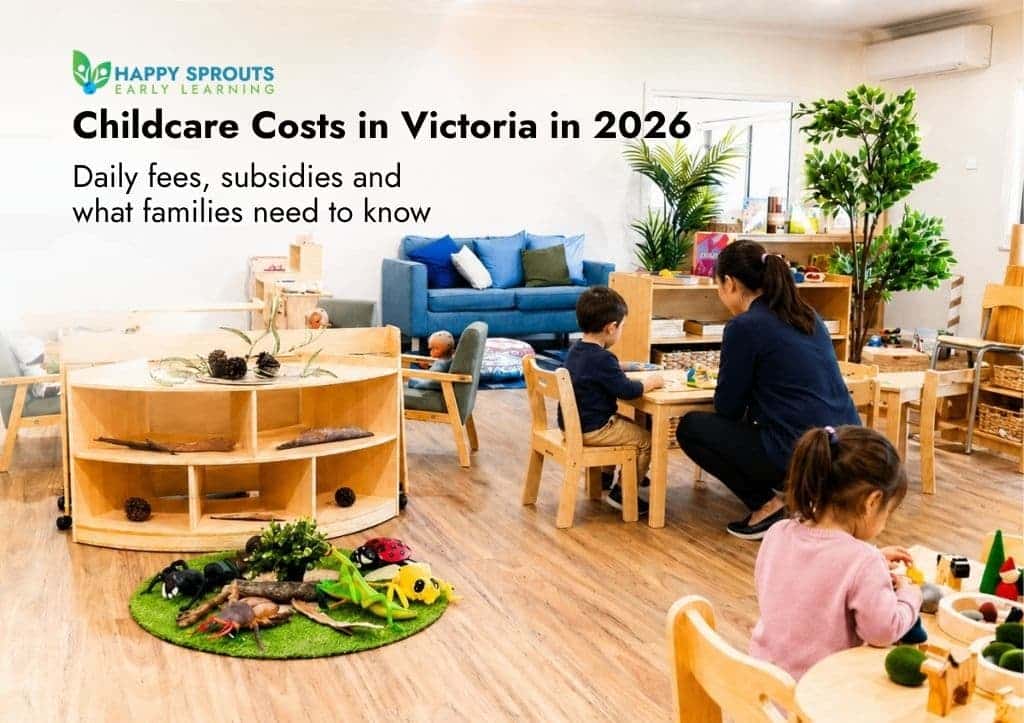
Childcare in Victoria in 2026 is more affordable than ever for most working families, thanks to the 3 Day Guarantee that started on 5 January 2026, the updated Child Care Subsidy (CCS) rates, and Victoria’s Free Kinder program. The Australian Government provides subsidies for childcare through the CCS, the Additional Child Care Subsidy, and the 2026 3 Day Guarantee, creating a layered support system for families across Craigieburn, Beveridge, Mickleham, and Kalkallo. This guide answers the most common questions parents ask, from how much childcare costs in 2026 to exactly how to apply through myGov.
Long day care in metropolitan Melbourne typically costs between $145 to $185.00 per day in 2026 before any government support is applied. That fee covers qualified educators, nutritious meals, nappies, learning resources, and compliance with the National Quality Framework overseen by ACECQA. The Child Care Subsidy reduces the fee you pay each week, so most eligible Victorian families end up paying a gap fee of just $20–$40 per day.
Victoria is the only state where Free Kinder funding stacks on top of the federal Child Care Subsidy for 3- and 4-year-olds in approved kindergarten programs. The Victorian Department of Education funds up to 15 hours per week, regardless of household income, which reduces the fee base before CCS is calculated.
Government subsidies work by paying your approved childcare provider directly, reducing the invoice you receive rather than reimbursing you later. Eligible working parents receive childcare subsidies paid straight to their provider, so the savings show up on every fortnightly statement instead of at tax time. The Australian Government pays CCS fortnightly, while the Victorian Government pays Free Kinder funding separately to registered kindergarten services.
Your CCS percentage is applied to whichever is lower: your centre’s hourly fee or the Commonwealth hourly rate cap of $14.63 for centre-based day care in 2025–26.
Stacking CCS, Free Kinder, and (where eligible) the Additional Child Care Subsidy can reduce a family’s childcare bill by 70–100%, depending on income and activity. This tiered support is designed by the Department of Education to make early learning financially accessible to every Australian family.
The 3 Day Guarantee started on 5 January 2026 and guarantees every CCS-eligible family earning below $535,279 a minimum of 72 hours of subsidised care per fortnight, roughly three days per week in long day care. It replaces the previous activity-test minimum, which locked many low-activity parents out of subsidised care.
Families can receive an increased entitlement of 100 hours per fortnight if they have more than 48 hours of recognised activity, an Aboriginal or Torres Strait Islander child, an approved exemption, or are receiving certain Additional Child Care Subsidy payments. This is the most significant structural change to the Child Care Subsidy since its introduction in 2018 and directly benefits parents who study part-time, work casual hours, or are returning to the workforce.
The 2026 Child Care Subsidy pays between 0% and 90% of your childcare fees, capped at an hourly rate of $14.63 for centre-based day care. Here’s how the 2026 income tiers translate into subsidy percentages:
| Combined Family Income (2025–26) | CCS Rate |
| Up to $85,279 | 90% |
| More than $85,279 to below $535,279 | Between 90% and 0% (decreases by 1% per $5,000) |
| $535,279 or more | 0% |
| Hourly rate cap (centre-based day care) | $14.63 |
Rates were last indexed to CPI on 7 July 2025 and will next be reviewed in July 2026.
To receive the Child Care Subsidy in Victoria, your family must meet four core eligibility criteria set by the Australian Government under the Family Assistance Law. Your eligibility criteria, combined family income, activity hours, and residency, determine the subsidy amount you receive each fortnight, so it pays to review each requirement carefully:
You apply for the Child Care Subsidy online through myGov, linked to your Centrelink account. There is no paper form, and the claim is free. Most families complete the application in 20–30 minutes and receive a decision within 28 days.
For a more detailed breakdown of each step, see our Child Care Subsidy (CCS) guide for Victorian families.
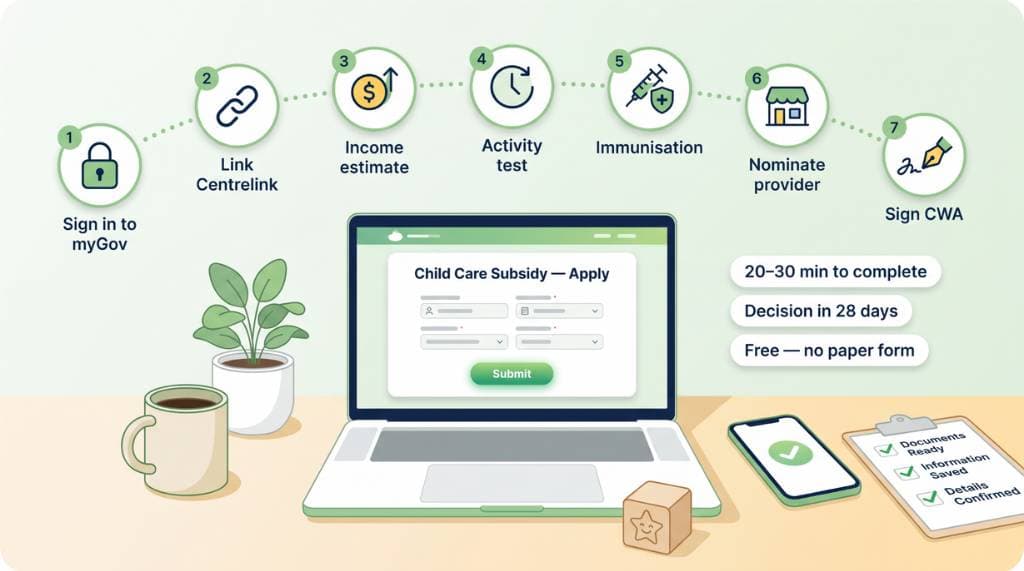
Have your myGov login, most recent tax return or payslips, bank account details, identification, and your child’s immunisation history ready to avoid delays.
Yes, Victoria offers the Free Kinder program, which fully funds up to 15 hours per week of kindergarten for eligible 3- and 4-year-olds at participating services, including integrated long day care centres.
For families facing hardship, the federal Additional Child Care Subsidy can cover up to 100% of fees for the hourly rate cap, which effectively makes long-day care free for qualifying households.
Beyond the standard CCS, several additional programs exist to further reduce childcare costs for Victorian families.
Families with more than one child aged 5 or under in care receive a higher CCS rate for the second and subsequent children, up to 95% for incomes up to $143,273, tapering to 50% for incomes between $357,563 and $367,563, after which standard rates apply.
The Additional Child Care Subsidy offers a higher rate for four groups: children at risk of harm, families in temporary financial hardship, grandparents receiving income support, and parents transitioning to work from income support. ACCS can cover up to 120% of the hourly rate cap for at-risk children.
Other support streams include the Inclusion Support Program for children with additional needs, the Victorian Start Strong funding for standalone kindergartens, and Centrelink parenting payments that can offset household budgets.
The 2026 childcare landscape in Victoria offers families more financial relief than any previous year, combining the federal Child Care Subsidy, the new 3 Day Guarantee, and the state-funded Free Kinder program to dramatically lower out-of-pocket costs for early learning. If you are a parent in Craigieburn, Beveridge, or the surrounding northern Melbourne suburbs, now is the ideal time to review your eligibility, lodge your CCS claim through myGov, and secure a place at a government-approved centre like Happy Sprouts so your child benefits from quality education while your family keeps more money where it belongs.
Long day care in Melbourne costs $130-$150 per day before subsidies in 2026, with most eligible families paying a gap fee of $20-$40 per day after CCS and Free Kinder are applied.
The CCS pays up to 90% of your fees, capped at the hourly rate of $14.63 for centre-based care, with the percentage decreasing as the combined family income rises above $85,279.
The 3 Day Guarantee started on 5 January 2026 and provides every eligible family earning below $535,279 with a minimum of 72 hours of subsidised care per fortnight, regardless of the activity test.
Apply online through myGov linked to Centrelink, select Child Care Subsidy under Families, provide your income estimate and activity details, and nominate your approved provider, such as Happy Sprouts.
You are eligible if you care for a child under 13 not yet in secondary school, use an approved provider, meet Australian residency rules, and keep your child’s immunisations up to date.
Yes, Victoria’s Free Kinder program funds up to 15 hours per week for eligible 3- and 4-year-olds at participating centres, including Happy Sprouts, and ACCS can make long day care free for families in hardship.
Families with multiple children aged 5 or under receive a higher CCS rate (up to 95%) for second and subsequent children, delivering substantial weekly savings.
Yes, Happy Sprouts is an Australian Government-approved childcare and kindergarten provider, so all eligible families can use their CCS and Free Kinder entitlements at our Craigieburn, Beveridge and Greenvale centres.
.

Playgroup benefits for toddlers include stronger social skills, early language, emotional confidence[...]
Transition to school is the process of moving a child from kindergarten into the first year of prima[...]
Early childhood services are the regulated education and care options available for children from bi[...]
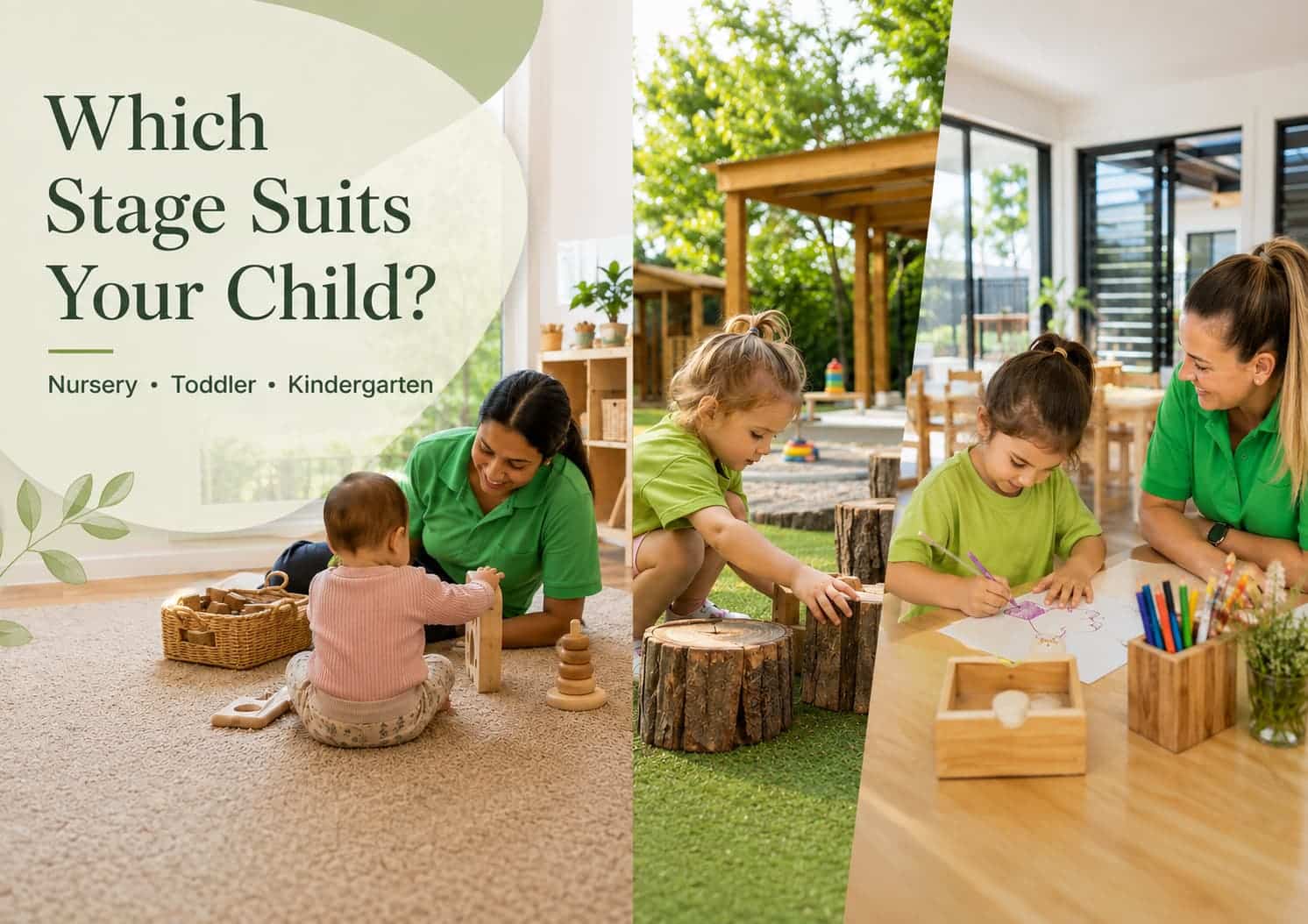
Nursery programs suit babies from approximately six weeks. Toddler programs suit children from aroun[...]
Quick answer The National Quality Framework (NQF) is Australia's national system for regulating a[...]
Childcare and kindergarten aren't the same thing. Childcare (or long day care) offers all-day [...]