


What Parents Should Know
For each family, selecting daycare is a significant decision. You want your youngster to feel secure, content, and encouraged. The choice you make must also accommodate your daily routine and job schedule.
In Melbourne, a lot of parents had the same query. Which choice is superior? A nanny at home, a family daycare centre, or both.
There isn’t a single solution that works for everyone. The ideal option will depend on your child’s personality, age, and daily routine.
Some kids like being in crowded places with lots of buddies. Some people are better at ease in quieter, smaller environments. While some families require more flexibility, others require set hours.
To help you choose the best option for your child, this guide provides a comprehensive comparison of Australia’s primary childcare options.
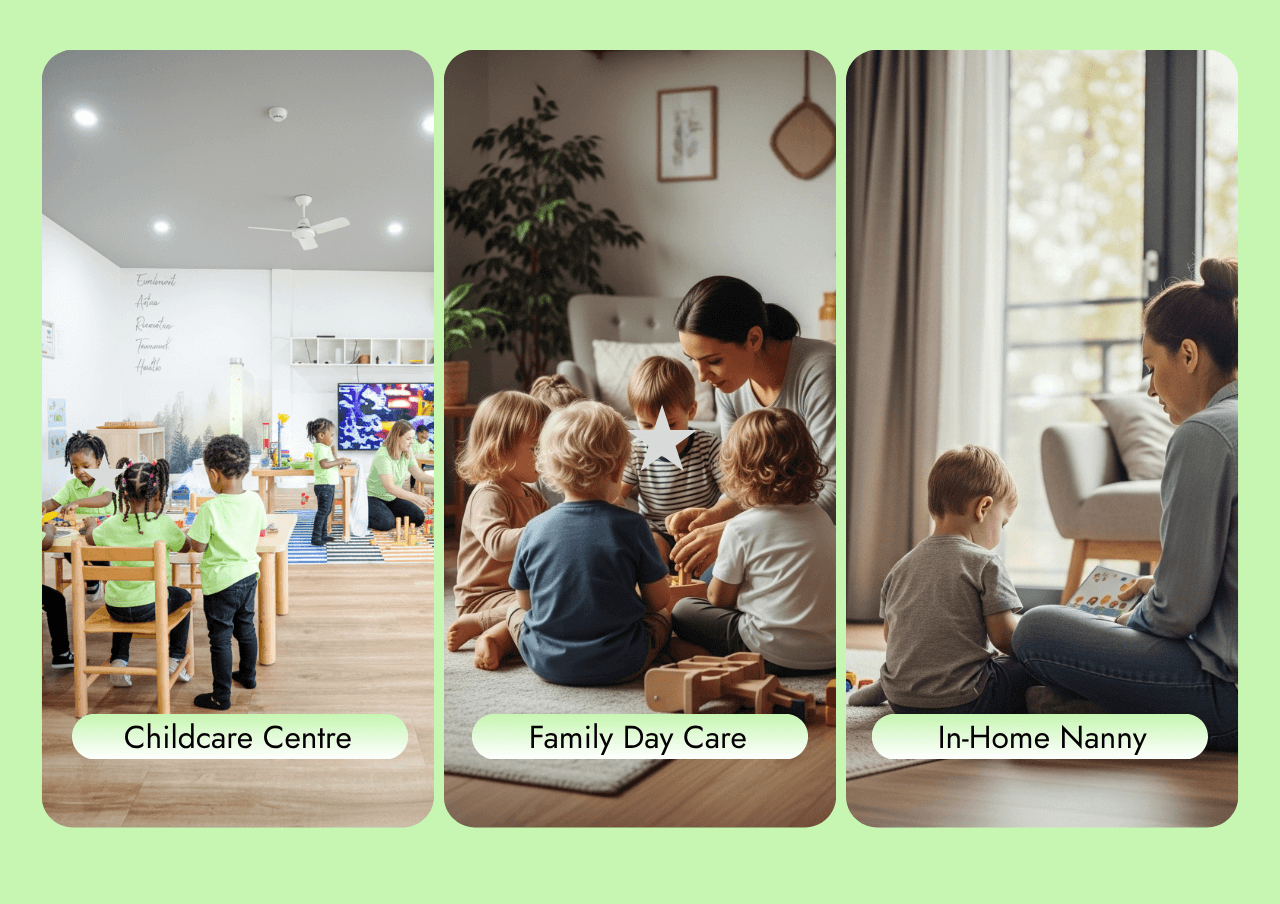
Childcare Centre
A childcare centre, also known as a long day care centre or early learning centre, is a facility where qualified educators care for and educate groups of children, typically from infancy through preschool age. They operate on a scheduled routine with structured activities, play, and rest times.
Childcare centres are the option most families know about.
Many centres run early learning programmes designed for different age groups.
You will often see:
For many children, this environment feels exciting. There are always things happening and lots of other children to play with.
If your child enjoys busy spaces and group play, a structured childcare centre environment, like those at Happy Sprouts, can support learning through play and social interaction.
Parents with babies often look for centres that provide specialised care for the youngest children. You can explore how this works in the Nursery and Walkers programme.
Family Day Care
Family day care is a childcare option in which care is provided in the educator’s home. It is characterised by small group sizes, typically four or five children, which creates a calmer, more home-like environment. The same educator usually cares for the children most days, offering a familiar carer and a more relaxed daily routine. Children of different ages may spend the day together.
Family day care is very different from a large centre.
Care happens inside the educator’s home. The group is small. Usually four or five children.
The same educator cares for the children most days. Because the group is smaller, the environment is quieter and often feels more like home.
Children of different ages may spend the day together.
Many families like family day care because it offers the following:
Young children often settle quickly because the setting feels warm and personal.
In-Home Nanny
A childcare provider who looks after your child at home is known as an in-home nanny. The carer comes to you and adheres to your family’s daily schedule rather than transporting your child to a facility or another residence.
A single child or siblings from the same family are typically looked after by nannies. This enables them to give your child individualised attention and care.
Younger children may feel more at ease and relaxed if they remain in a familiar setting. Additionally, the timetable may accommodate your family’s working hours, which is beneficial for parents who work shifts or have early or late start times.
A nanny usually provides:
Children may have fewer opportunities to socialise with other kids during the day because the care is provided at home unless families plan playgroups, park outings, or other social events.

Each child is unique. Children’s reactions to daycare are significantly influenced by their personalities.
For Quiet or Sensitive Children
Children who are quiet or sensitive may take longer to become used to new situations and people. They frequently favour quiet areas, well-known people, and dependable schedules.
Some kids need some time to get used to unfamiliar surroundings. Busy spaces and noisy rooms can be intimidating.
These kids frequently feel more secure and more at ease in smaller environments.
A nanny who provides care at home or family day care, where a small group is cared for in a home, can be effective. These choices provide a familiar carer in a peaceful setting.
When the surroundings remain consistent, children are more equipped to develop trust.
This sense of security is crucial for infants and young children.
For Social and Energetic Children
Children who are gregarious, lively, and at ease participating in group activities are considered social and energetic.
Some kids enter a place and want to be involved immediately.
They take pleasure in movement, commotion, and being with other kids.
These personalities are typically best suited for a daycare centre where kids are cared for in groups with organised activities.
There are more kids, more opportunities for social interaction, and more group play.
This kind of environment makes a lot of gregarious kids feel at ease and involved.
For Only Children
Since they have no siblings at home, only children spend a large portion of their early socialisation with adults rather than other kids.
One-child parents frequently consider social engagement.
Children can learn how to share, take turns, and interact with others in group settings like daycare centres.
However, one-on-one care is still important.
Some kids are more at ease starting out in family day care or with a nanny before transferring to a centre as they get older.
As kids become older, structured programmes like 3-year-old kindergarten help them become more self-assured, independent, and prepared for school.
When selecting childcare, numerous parents receive identical recommendations.
Initially, it appears to be logical. Children must develop a greater sense of social interaction when they interact with numerous other children.
Consistent and responsive relationships with carers are optimal for the development of young children. These relationships foster a sense of security, confidence, and support that enables children to investigate their surroundings.
The Australian Institute of Family Studies explains that the quality of childcare plays an important role in children’s development and wellbeing. Factors such as educator responsiveness, appropriate staff-to-child ratios, and meaningful interactions between carers and children all influence how children develop in early childhood settings.
When educators care for smaller groups, it can be easier to respond to each child’s needs, especially for babies and very young toddlers.
As children grow older, group environments can help them develop cooperation, communication, and friendships.
The key point is balance. Social development depends not only on how many children are present but also on the quality of care and the relationships children build with trusted adults.
Development is not the main factor in childcare decisions. Everyday life is important as well.
Hours and Flexibility
Childcare facilities typically have set business hours.
Depending on the arrangement, family day care and nannies may occasionally provide greater flexibility.
Families that change their hours or work early shifts frequently take a serious look at this.
Sick Days and Backup Care
There are typically multiple educators collaborating in childcare facilities. The centre continues to operate even if one person is ill.
One teacher is all that is needed for family day care. Care may not be available that day if the individual is unavailable.
If your nanny becomes sick, you might need a backup plan.
Familiar Faces
When a child sees the same carer every day, they frequently feel safe.
This constancy is typically offered by nanny care and family day care.
Children may engage with different staff members throughout the week because childcare facilities employ multiple educators. Some kids get used to this rather fast. The familiarity of a single primary carer is preferred by others.
Safe and Supportive Learning Environments
One of the first things parents think about when selecting daycare is safety.
With skilled personnel and well-defined safety protocols, quality centres uphold safe surroundings.
Kids gain from:
These steps contribute to the creation of a secure space for kids to play, explore, and learn.
| Feature | Childcare Centre | Family Day Care | In-Home Nanny |
|---|---|---|---|
| Group Size | Larger groups | Small group | One child or siblings |
| Location | Purpose-built centre | Educator’s home | Your home |
| Social Interaction | High | Moderate | Low |
| Flexibility | Fixed hours | Sometimes flexible | Highly flexible |
| Learning Programs | Structured early learning | Informal learning | It depends on the nanny. |
| Backup Care | Usually available | Limited | It depends on the nanny. |
Finding the ideal system is not the goal of childcare selection.
Finding a setting where your child feels supported and at ease is the key.
Keep an eye on your child’s reactions when you visit. Speak with teachers. Enquire about group sizes and daily schedules.
It really is that easy.
You can visit Happy Sprouts Early Learning to get a firsthand look into how a centre operates.

Sessional kinder is a free, teacher-led kindergarten program for three- and four-year-old in Victori[...]
Playgroup benefits for toddlers include stronger social skills, early language, emotional confidence[...]
Transition to school is the process of moving a child from kindergarten into the first year of prima[...]
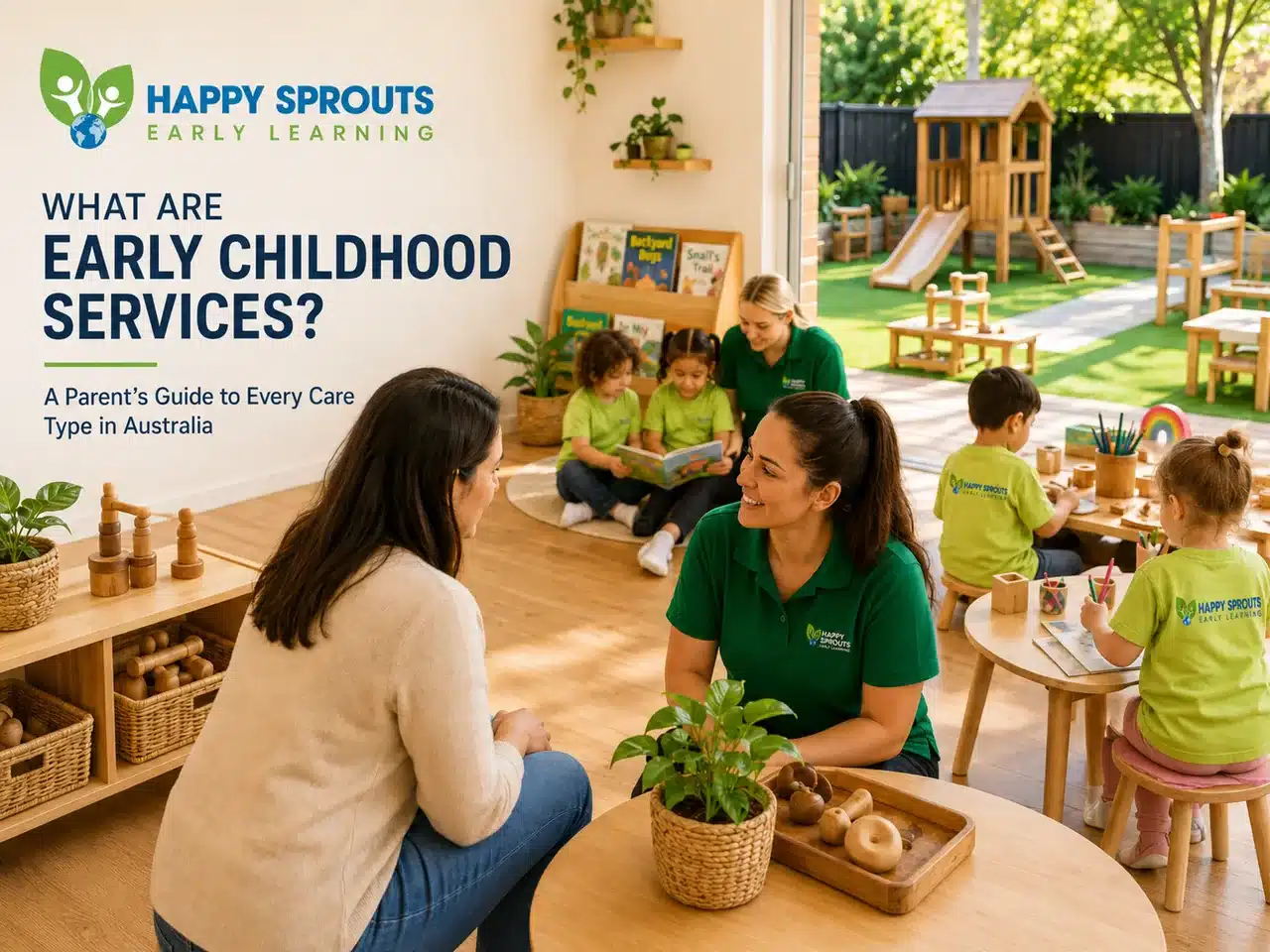
Early childhood services are the regulated education and care options available for children from bi[...]
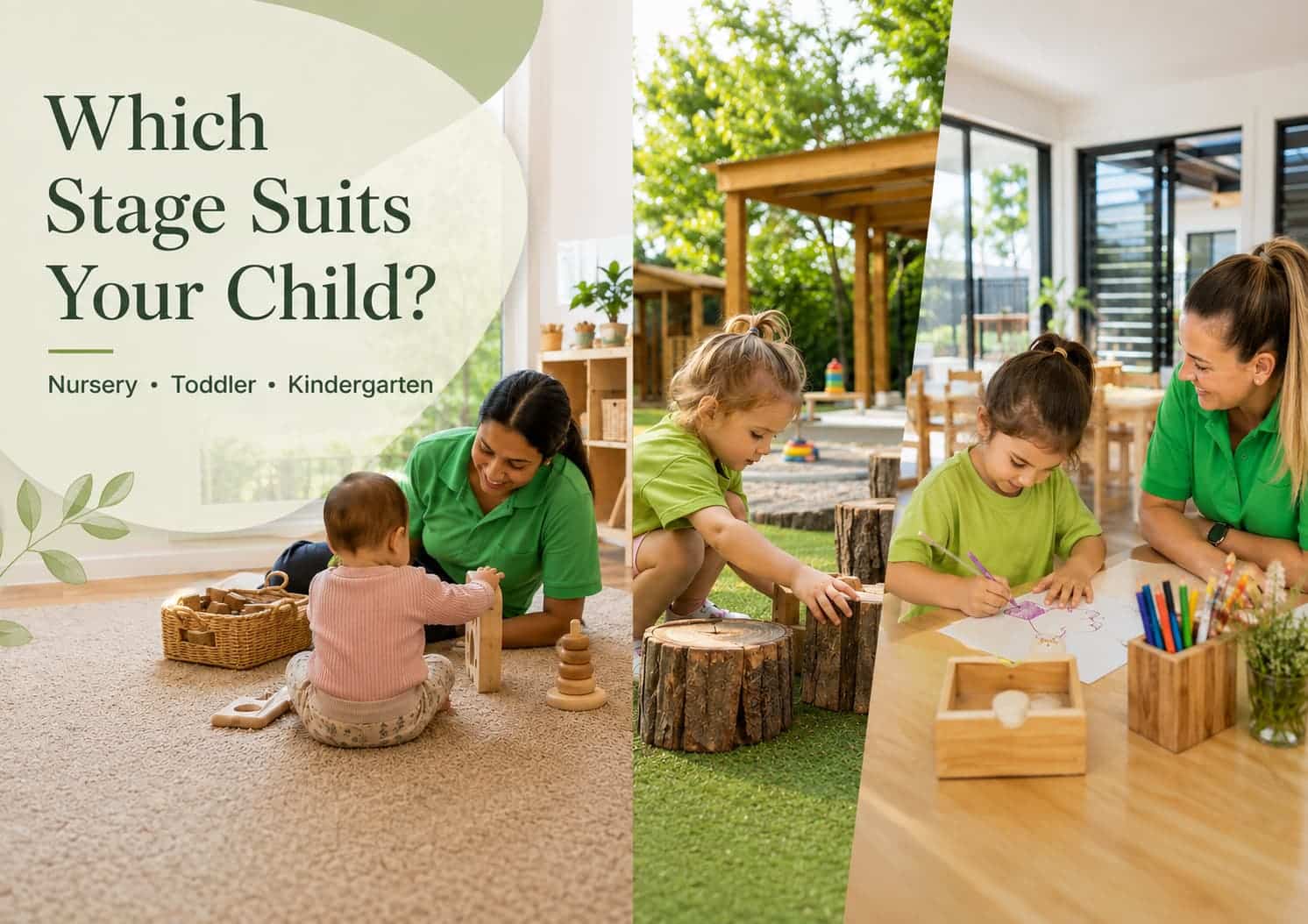
Nursery programs suit babies from approximately six weeks. Toddler programs suit children from aroun[...]
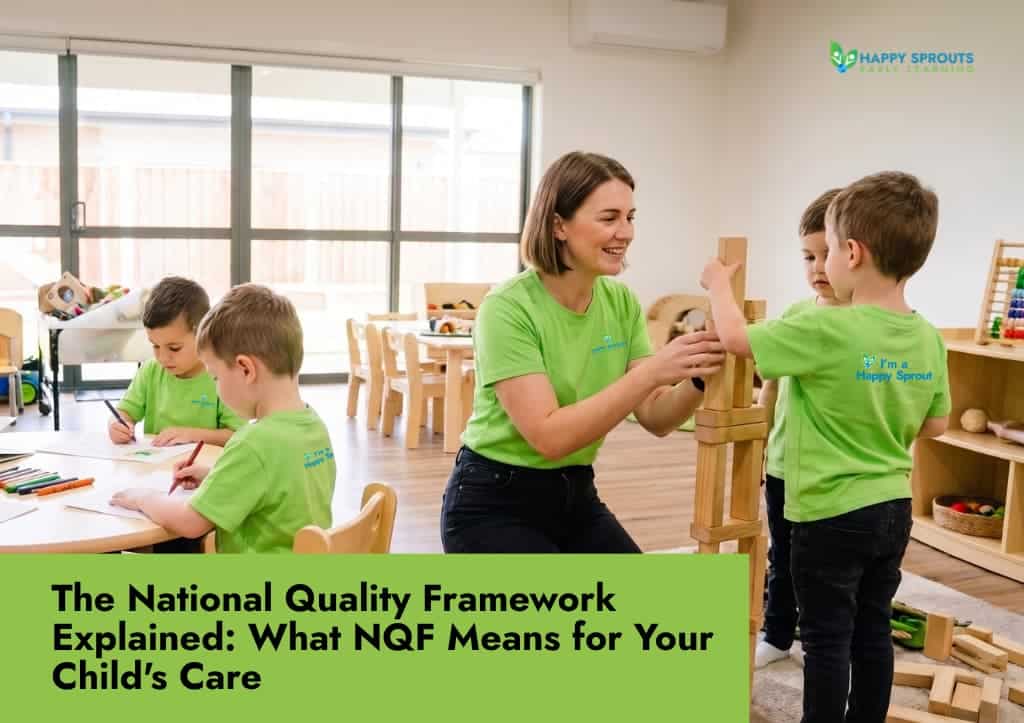
Quick answer The National Quality Framework (NQF) is Australia's national system for regulating a[...]