

Quick answer
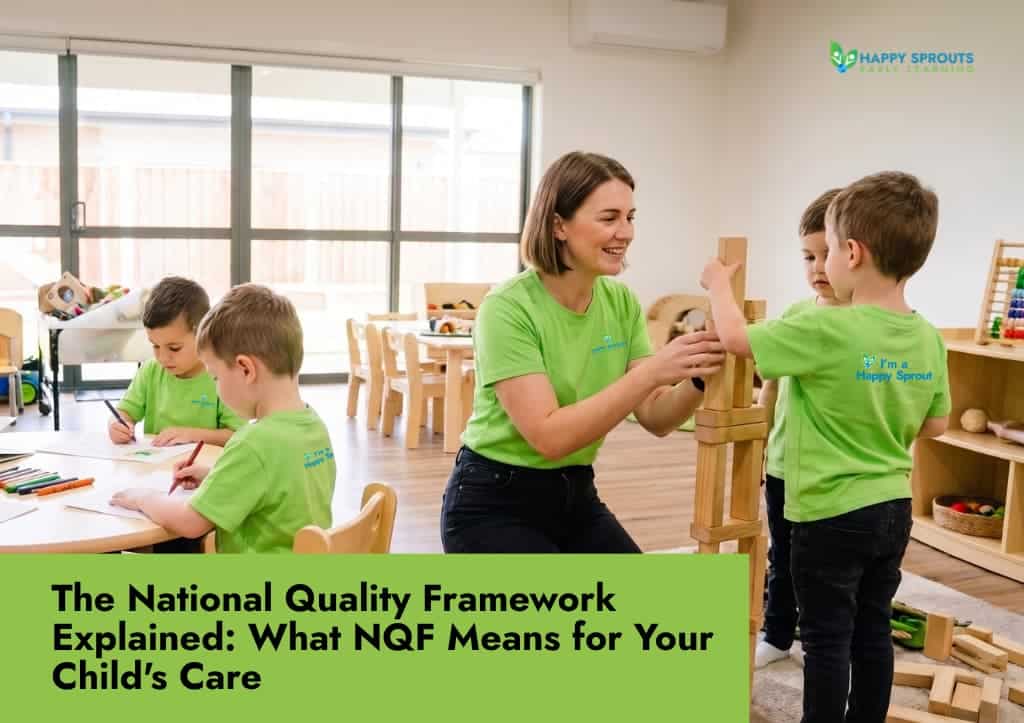
The National Quality Framework (NQF) is Australia’s national system for regulating and improving early childhood education and care. It sets legal standards for safety, staffing and learning, and every approved childcare service is independently assessed and publicly rated against the National Quality Standard. For you as a parent, it means your child’s centre is accountable for quality every single day.
Every parent wants to know their child is safe, happy and learning while they are at care. The National Quality Framework is the system that makes sure of it. This guide explains what the NQF is, who runs it, what the seven quality areas cover, and how to check any centre’s rating before you enrol. To see how a quality framework shapes daily learning, you can also explore our curriculum.
Key facts
It is the single national rulebook for early childhood education and care in Australia. The NQF sets out the laws every childcare service must follow, the standards they are measured against, and the way their quality is assessed and shared with families. It covers long day care, family day care, kindergarten and outside school hours care.
The framework has four working parts. The National Law and Regulations set the legal rules, from safety to staffing. The National Quality Standard (NQS) sets the seven quality areas services are measured against. The assessment and rating process gives each service a public rating. The approved learning frameworks, including the Early Years Learning Framework (EYLF), guide how educators plan your child’s learning.
In plain terms: the law sets the floor, the standard sets the bar, the ratings tell you how each centre measures up, and the learning frameworks shape what your child actually does each day.
Tip
You will see a lot of acronyms in childcare. NQF is the whole framework. NQS is the standard inside it. ACECQA is the national authority. QIP is each centre’s improvement plan. Once you know these four, the paperwork makes sense.
A national authority sets the direction and state regulators do the checking. The Australian Children’s Education and Care Quality Authority (ACECQA) guides the NQF and keeps it consistent across the country. State and territory regulators do the on-the-ground work. In Victoria, the Department of Education sends authorised officers to visit and assess centres, including ours in Craigieburn, Beveridge and Greenvale.
This matters because quality is not self-reported. An external assessor walks through the centre, watches educators at work, reviews documentation and talks to staff before any rating is given.
They cover everything that affects your child, from learning programmes to leadership. The National Quality Standard measures every service across seven areas. Here is what each one means for your child:
| Quality area | What it means for your child |
|---|---|
| 1. Educational program and practice | Learning is planned around your child’s interests and stage of development |
| 2. Children’s health and safety | Your child is kept safe, healthy and well supervised |
| 3. Physical environment | Spaces are safe and stimulating, with natural materials and outdoor play |
| 4. Staffing arrangements | Enough qualified educators are rostered on, every day |
| 5. Relationships with children | Educators build warm, respectful and responsive bonds with your child |
| 6. Partnerships with families and communities | You are kept informed and involved in your child’s learning |
| 7. Governance and leadership | The centre is well run, with clear policies and accountable leadership |
Together these cover everything from nappy change hygiene to how educators document your child’s progress.

Every approved service receives one of five ratings after an assessment visit. The rating must be displayed at the centre where families can see it.
| Rating | What it tells you |
|---|---|
| Excellent | Awarded by ACECQA to top services, the highest tier |
| Exceeding NQS | Performs above the national standard |
| Meeting NQS | Meets the national standard in all seven areas |
| Working Towards NQS | Provides safe care but has areas to improve |
| Significant Improvement Required | Serious issues, the regulator steps in |
The good news for Australian families: as at early 2026, 92% of services nationally are rated Meeting NQS or above, according to ACECQA’s quarterly NQF Snapshot.
Ratings are not one-off. Every service must keep a Quality Improvement Plan (QIP), a living document that identifies strengths and sets goals for improvement. Regulators reassess services over time, and a quality centre will happily talk you through what it is working on.
It takes a few minutes and is worth doing before any waitlist deposit. Follow these steps:
Tip
A Working Towards rating does not automatically mean a centre is unsafe. It means assessors found areas to improve. Always read the rating alongside a visit, and ask the director what has changed since the last assessment.
It shapes the everyday details: who cares for your child, how many children they care for, and what your child learns.
The NQF sets minimum ratios by age so your child gets enough attention. In Victoria, the ratios are:
| Age group | Minimum ratio |
|---|---|
| Under 2 years | 1 educator to 4 children |
| 2 to 3 years | 1 educator to 4 children |
| 3 years to school age | 1 educator to 11 children |
Educators must hold or be working towards approved qualifications, and long day care services must engage an early childhood teacher. You can see how our team approaches this on our education page.
The EYLF, and in Victoria the VEYLDF, guides how educators plan learning through play, from the nursery right through to funded sessional kinder. Quality area 6 also requires genuine partnership with you: regular updates, open communication and a real say in your child’s learning.
Use the NQF as your shortlist tool, then trust what you see on a visit. The framework does the heavy lifting on safety and standards, so you can focus on fit and feel.
Checklist by family stage
Every Happy Sprouts centre across Craigieburn, Beveridge and Greenvale operates under the NQF, with a VEYLDF-based curriculum, qualified educators and a QIP we are glad to share. If you are starting your search, our getting started guide is a good next step, or book a tour and see the quality areas in action.
The NQF is the whole system: laws, standards, ratings and learning frameworks. The NQS is one part of it, the seven quality areas that services are rated against.
Yes. All approved long day care, family day care, kindergarten and outside school hours care services in Australia must operate under the NQF.
Meeting NQS means a service meets the national standard in all seven quality areas. Exceeding NQS and Excellent indicate quality above the standard.
There is no fixed cycle. Regulators prioritise visits based on time since the last assessment, the previous rating and any compliance history. Services update their Quality Improvement Plan continually between visits.
Search the service on StartingBlocks.gov.au, or look for the rating displayed at the centre’s entrance. You can also simply ask the centre director.
Yes. Funded kinder delivered in a long day care setting, like our sessional kinder, sits under the same framework and standards.
Indirectly, yes. The Child Care Subsidy is only paid for care at approved services, and approved services are the ones regulated under the NQF. Our Child Care Subsidy guide explains how the payments work.
It means the service provides safe care, but assessors found areas to improve. Ask the centre what has changed since the assessment and read the rating alongside your own visit.
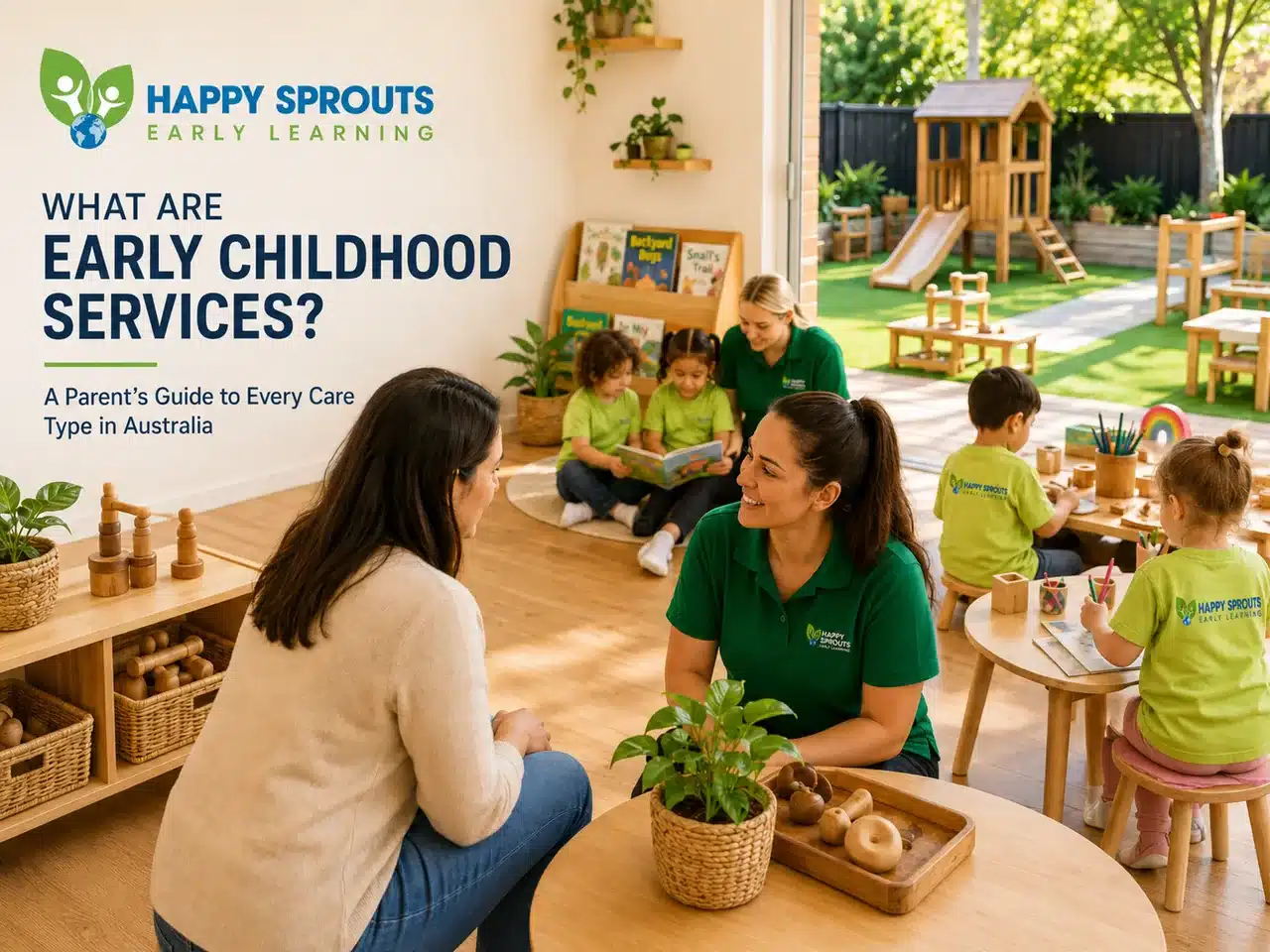
Early childhood services are the regulated education and care options available for children from bi[...]
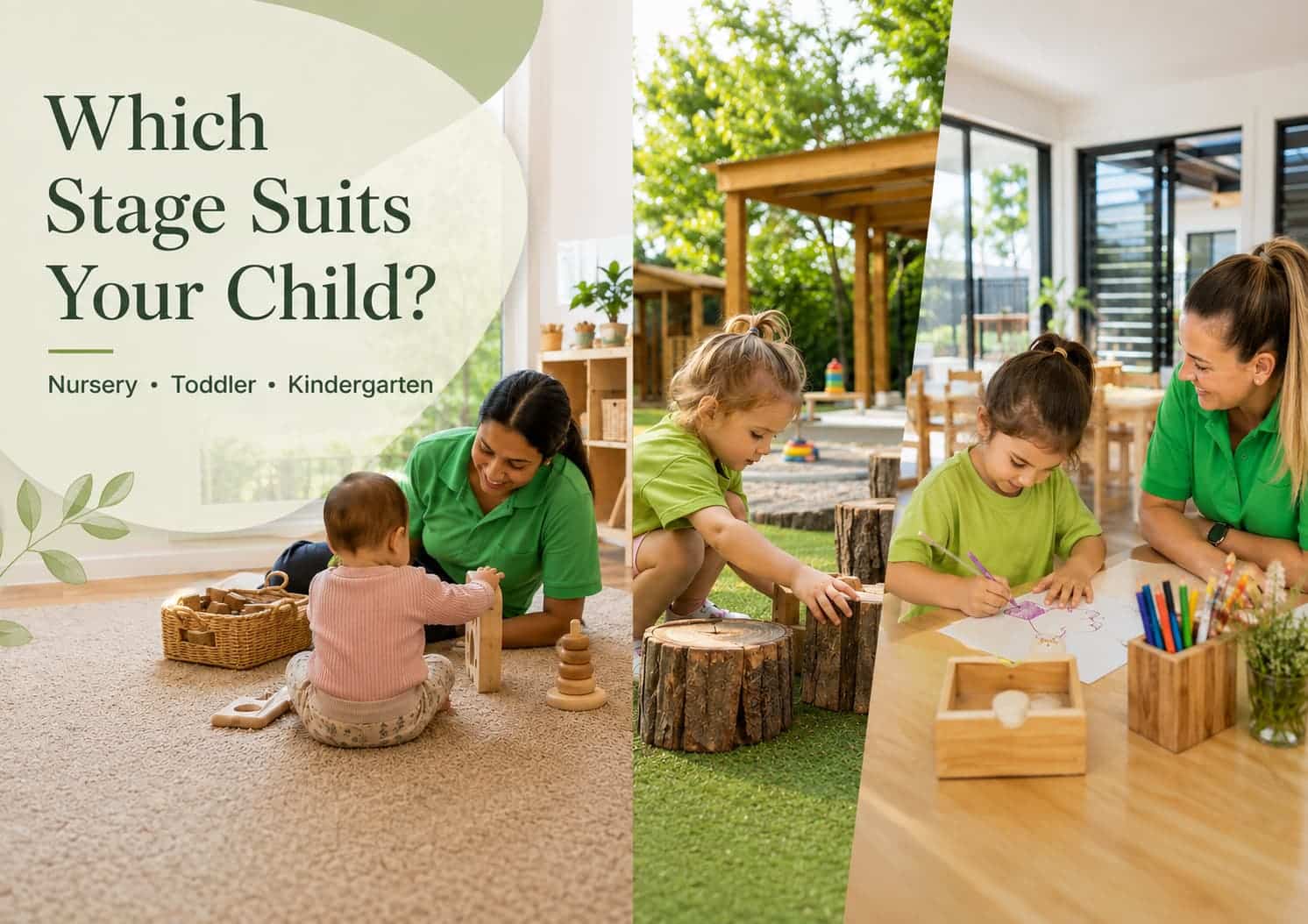
Nursery programs suit babies from approximately six weeks. Toddler programs suit children from aroun[...]
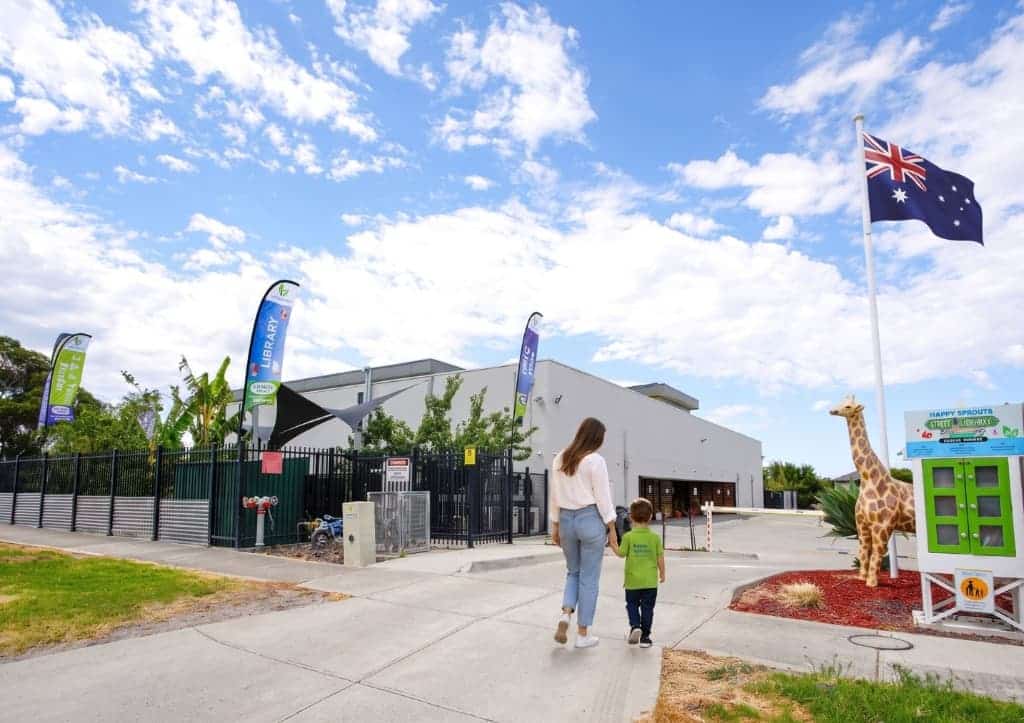
Childcare and kindergarten aren't the same thing. Childcare (or long day care) offers all-day [...]
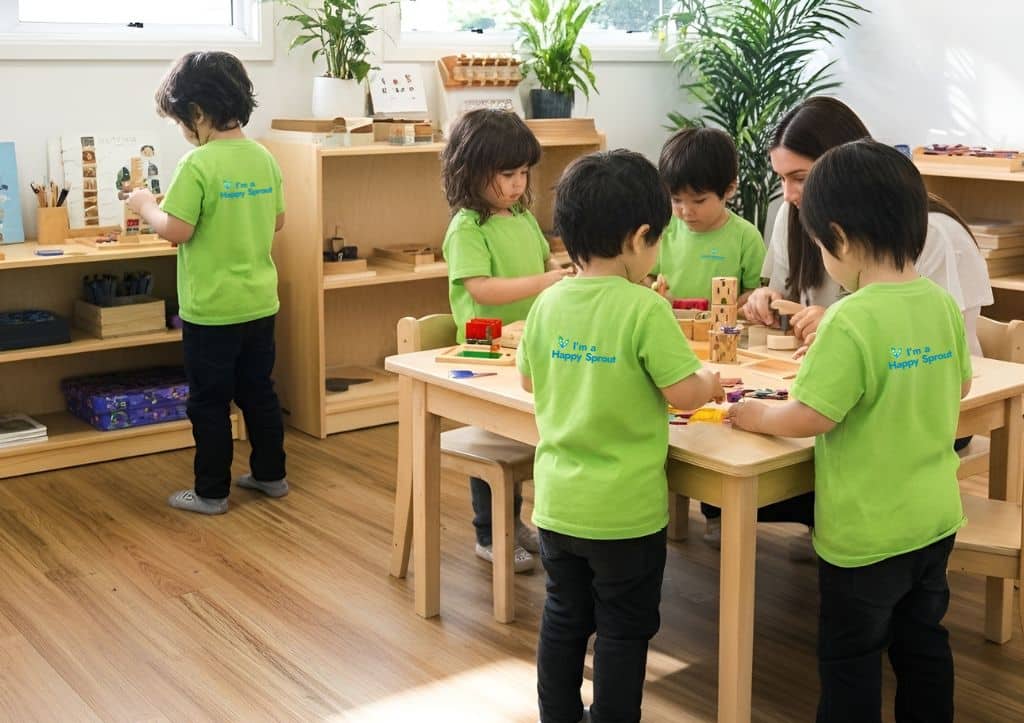
Play is not a break from learning in early childhood; play is the learning. Play-based learning in e[...]
Childcare in Victoria in 2026 is more affordable than ever for most working families, thanks to the [...]
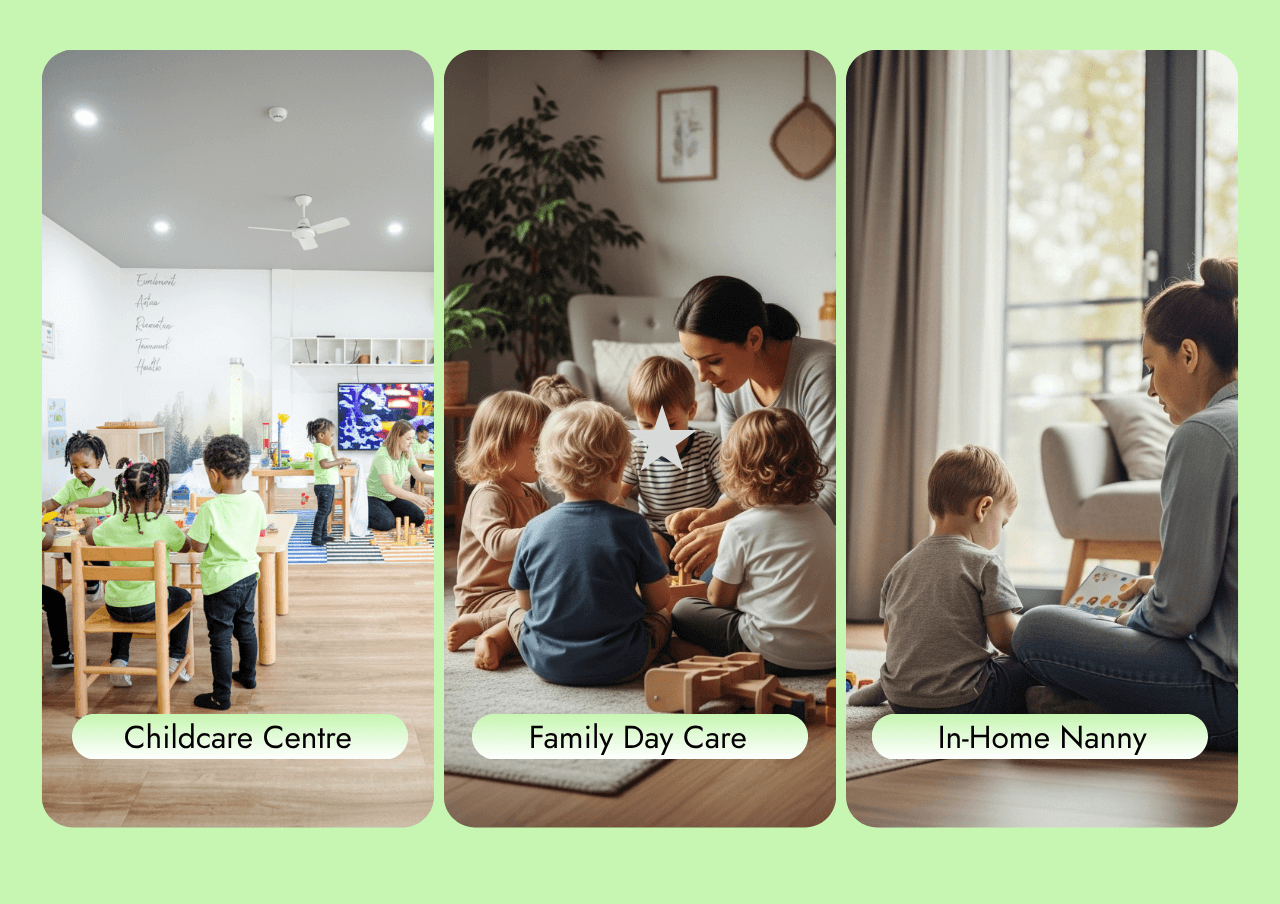
A Simple Guide for Parents What Parents Should Know For each family, selecting daycare is a sign[...]